
Type B arrangement
The source identifies this family as a 90 degree square-cutter boring holder.
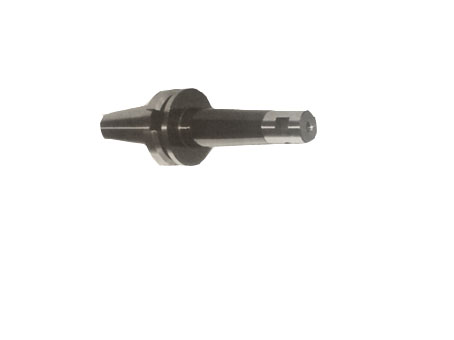
Catalog reference image. Final configuration is confirmed in the quotation.
BT-BSB
BT40 and BT50 Type B rough boring holders with a 90-degree cutter arrangement. Catalog families cover 25–150 mm bores; each model has its own working range.
BT Type B boring holders use the catalog's 90 degree square-cutter arrangement for rough boring. BT40 and BT50 versions cover different bar sizes, lengths and boring ranges. Choose the target hole and required reach first, then verify the corresponding holder row, cutter arrangement and available clearance on the machine setup.
The source identifies this family as a 90 degree square-cutter boring holder.
Use the boring range belonging to the selected model, not the entire series maximum.
Review L1 and bar diameter together against the hole depth and access requirement.
The BT50-BSB50 row lists a 50–90 mm boring range, a 40 mm bar diameter and L1 options of 180 or 240 mm. The bar diameter is not the hole diameter, and L1 should not be treated as the available cutting depth. Check the drawing reference faces, cutter position and workpiece clearance before choosing the length.
Request a BT50-BSB50 drawing and quotation. State the starting and finished bore diameters, required depth, workpiece material and preferred L1 so the inquiry identifies one configuration.
The BSB series uses a 90-degree cutter arrangement. If you are matching a 45-degree setup, compare the BSA Type A rough boring holders instead. A matching BT40 or BT50 interface alone does not confirm that the cutting assembly will fit the same job.
Include the square-cutter dimensions, machine interface, quantity and destination with your inquiry. Ask for the selected model drawing and confirmation of the supplied cutter and fastening hardware; the grouped catalog ranges do not establish the contents of an individual quotation.
Dimensions are in millimeters. Grouped BT40-BSB25/38/50/62 and BT50-BSB25/38 entries contain separate model-specific boring ranges, not one universal range. Confirm the selected model, L1, bar diameter and cutter arrangement on the final drawing.
Select an underlined catalog reference to include that row in your inquiry.
| Ordering family | L1 | Bar d | Catalog boring ranges d1 |
|---|---|---|---|
| BT40-BSB25/38/50/62 | 120/150/165/180 | 20/30/40/50 | 25-52 / 38-70 / 50-90 / 62-115 |
| BT50-BSB25/38 | 135/180 | 20/30 | 25-52 / 38-70 |
| BT50-BSB50 | 180/240 | 40 | 50-90 |
| BT50-BSB62 | 195/270 | 50 | 62-115 |
| BT50-BSB72 | 195/285 | 60 | 72-135 |
| BT50-BSB90 | 210/300 | 75 | 90-150 |
No matching model in this table. Try a shorter code, or send your required size or drawing.
Ranges and slash-separated values describe catalog families, not every possible combination. Confirm the complete model and drawing before ordering.
Typical selection contexts for this series, not customer project claims. Confirm machine compatibility and cutting conditions for your setup.
Preparing an existing hole for a later finishing operation.
Selecting a listed bar size for a planned boring diameter and depth.
Organizing boring holders for a confirmed BT40 or BT50 machine.
Specify the dimensions, tolerances and records your order requires. Acceptance criteria must be agreed for the selected model.
Check the drawing reference faces and units. A catalog size alone does not define a tolerance or an inspection method.
List any required dimensional report, material document or model identification photograph in your inquiry. Confirm availability and scope in the quotation.
For a drawing-based part, include the drawing revision and identify the critical dimensions. Website photographs are not inspection reports.
Agree the packing method and photo requirements when confirming your order.
No verified shipment photographs for this series are currently published. Include selected-model, protective-packing and outer-label photos in your order requirements.
Discuss packing requirementsUse this checklist to agree what should be documented for your selected model.
Stock, dispatch date and shipping method are confirmed with the quotation. Website images are not live inventory evidence.
Keep a copy of the current series information for comparison. Confirm the final model and drawing before placing an order.
View specificationsRead interface names and ordering codes before choosing a holder.
Read the guideBrowse the existing tooling guides and compare product families before selecting a model.
Browse technical resourcesCompare alternative interfaces and complementary tooling. A related series is not automatically interchangeable.
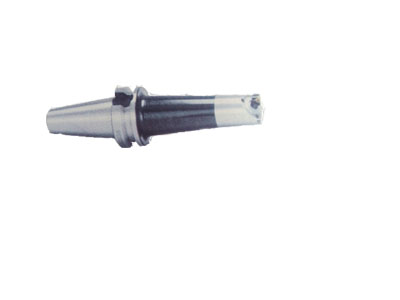
BT-BSA
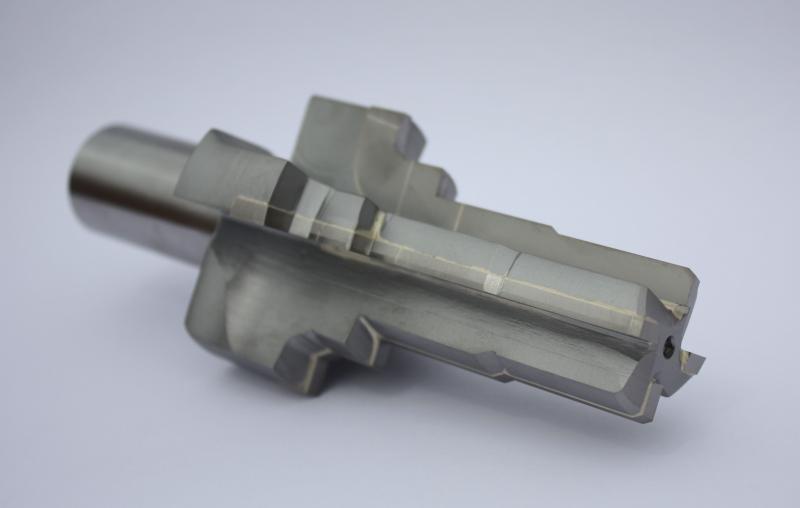
CARBIDE COUNTERBORE SERIES
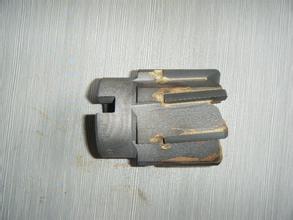
25-100 MM SERIES
No. That is the overall series span. Each ordering row has a narrower stated boring range.
The catalog describes rough boring and does not provide a fine-adjustment increment or finish-tolerance claim.
This family is labeled 90 degree Type B; Type A is labeled 45 degree. Compare cutter arrangement and geometry before selection.
Package contents are not established by this table. State the cutter and clamping parts needed in the inquiry.